TVN NEWS

Diego Perez is a meditator, writer, and speaker who is most widely known on Instagram and various social media networks through his pen name Yung Pueblo. The name Yung Pueblo means young people; it serves to remind him of his Ecuadorian roots, his experiences in activism, and that the collective of humanity is in the midst of important growth.
Subscribe to the Flowerlounge Podcast at:
http://www.lotuswei.com/podcast
***
Katie is the founder of LOTUSWEI, SAN Center + EARTHAURA, and host of the Flowerlounge Podcast.
She weaves together the beauty + wisdom of nature, with a fiercely intuitive + compassionate approach to business. She has grown three innovative businesses centered around awakening our true potential. She integrates Eastern ancient wisdom practices with modern accessibility. Her offerings demonstrate an expansive way of life, through simple yet profound methods.
#flowerloungepodcast
***
CONNECT WITH LOTUSWEI:
EXPLORE OUR FLOWER ESSENCES: http://www.lotuswei.com JOIN US AT AN EVENT: https://www.lotuswei.com/experiences GET A FLOWER READING OR BODY TREATMENT: http://www.sancenterphx.com
COME TO A LOTUSWEI RETREAT: https://www.earthaura.com LISTEN TO OUR PODCAST: https://www.lotuswei.com/podcast
FOLLOW LOTUSWEI ON SOCIAL MEDIA:
INSTAGRAM: http://www.instagram.com/lotuswei
FACEBOOK: http://www.facebook.com/lotuswei
KATIE HESS LINKEDIN: https://www.linkedin.com/in/katiehess TIKTOK: https://vm.tiktok.com/bhk1nW/
PINTEREST: http://www.twitter.com/lotuswei
TWITTER: http://www.twitter.com/lotuswei

Because every organization produces and propagates data as part of their day-to-day operations, data trends are becoming more and more important in the mainstream business world’s consciousness. For many organizations in various industries, though, comprehension of this development begins and ends with buzzwords: “Big Data,” “NoSQL,” “Data Scientist,” and so on. Few realize that all solutions to their business problems, regardless of platform or relevant technology, rely to a critical extent on the data model supporting them. As such, data modeling is not an optional task for an organization’s data effort, but rather a vital activity that facilitates the solutions driving your business. Since quality engineering/architecture work products do not happen accidentally, the more your organization depends on automation, the more important the data models driving the engineering and architecture activities of your organization. This webinar illustrates data modeling as a key activity upon which so much technology and business investment depends.
Specific learning objectives include:
- Understanding what types of challenges require data modeling to be part of the solution
- How automation requires standardization on derivable via data modeling techniques
- Why only a working partnership between data and the business can produce useful outcomes

Get guidance on how to think about and establish realistic Big Data management plans and expectations for generating business value. View more Data-Ed webinars with Peter Aiken: https://www.dataversity.net/ca....tegory/education/web
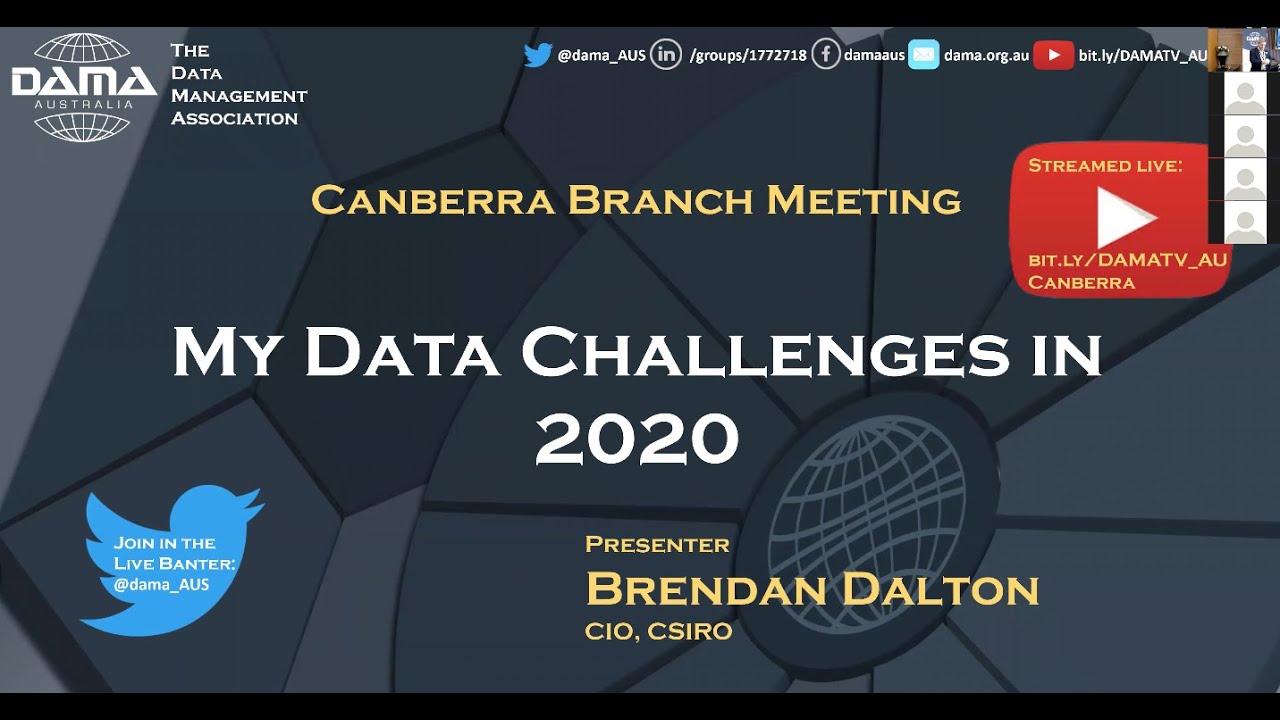
CSIRO’s purpose as Australia’s national science agency is to solve Australia’s greatest challenges through innovative science and technology - A role it has been performing for the past 100 years. Digital science underpins everything we do. In fact, we see being the best at doing digital science as fundamental to our future. Put another way, if we aren’t the best at digital science we won’t be able to solve the greatest challenges. And it's all underpinned by data!
So my data challenges for 2020 are:
Introducing a new operating model for CSIRO supporting better data management for science - we manage data better, more consistently, and so our data is F.A.I.R.
Developing a data literate workforce
Creating platforms supporting data management across science disciplines and
Creating a managed science data ecosystem for CSIRO as an exemplar for Australia and a shared resource with our collaborators.
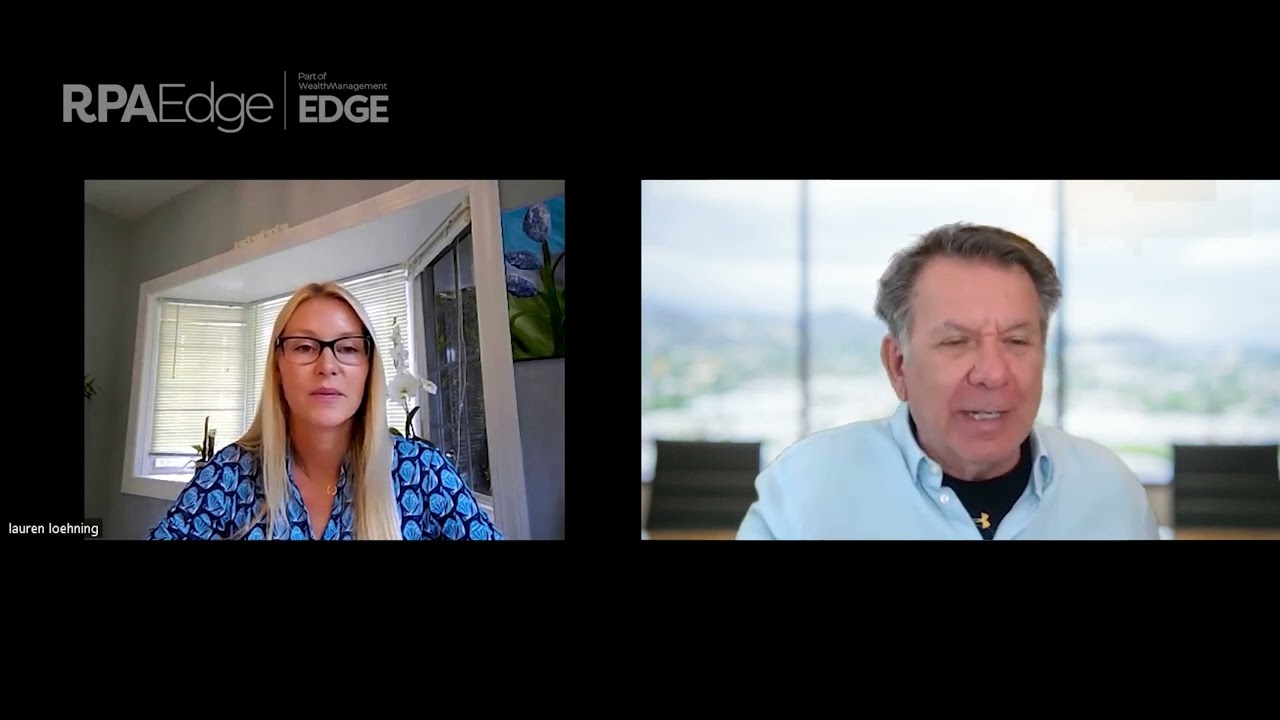
Fred Barstein, contributing editor to WealthManagement.com’s RPA Edge, invites retirement industry thought leaders to answer three probing questions on critical issues providing an open, honest and candid dialogue. So let’s get real!
Our guest this week is Lauren Loehning, an RPA at Retirement Impact & meditation and mindfulness coach at corporate financial wellness provider Rise Excel who addresses:
What is mindfulness and why should advisors and plan sponsors care about it? How can they use it for themselves and to help clients?
What are you working on now to bring mindfulness to the 401(k) industry? What has been the reception?
How did you get involved with mindfulness? Why are you so passionate about it?

The difficulty of implementing a new data strategy often goes underappreciated, particularly the multi-faceted procedural challenges that need to be met while doing so. Deficiencies in organizational readiness and core competence represent clearly visible problems faced by data managers, but beyond that there are several cultural and structural barriers common to virtually all organizations that must be eliminated in order to facilitate effective management of data. This webinar will discuss these barriers--as well as the titular "Seven Deadly Data Sins"--and in the process will also:
- Elaborate upon the three critical factors that lead to strategy failure
- Demonstrate a two-stage data strategy implementation process
- Explore the sources and rationales behind the “Seven Deadly Data Sins”, and recommend solutions and alternative approaches

Although metadata management is one of the core components of the Enterprise Data Management discipline, many organizations have difficulty justifying an Enterprise Metadata Management program. In many instances, metadata is viewed narrowly as a technical issue.
This presentation will center around leveraging metadata best practices in a practical manner to solve business critical problems - specifically, the following topics will be discussed:
* Common business vocabulary across the enterprise and the governance process around it
* Impact analysis -- data traceability through the layers of architecture
* Root cause analysis -- data lineage from the point of entry through the point of consumption by systems and reports
* Leveraging operational metadata for real-time and near real-time straight-through (lights-out) processing
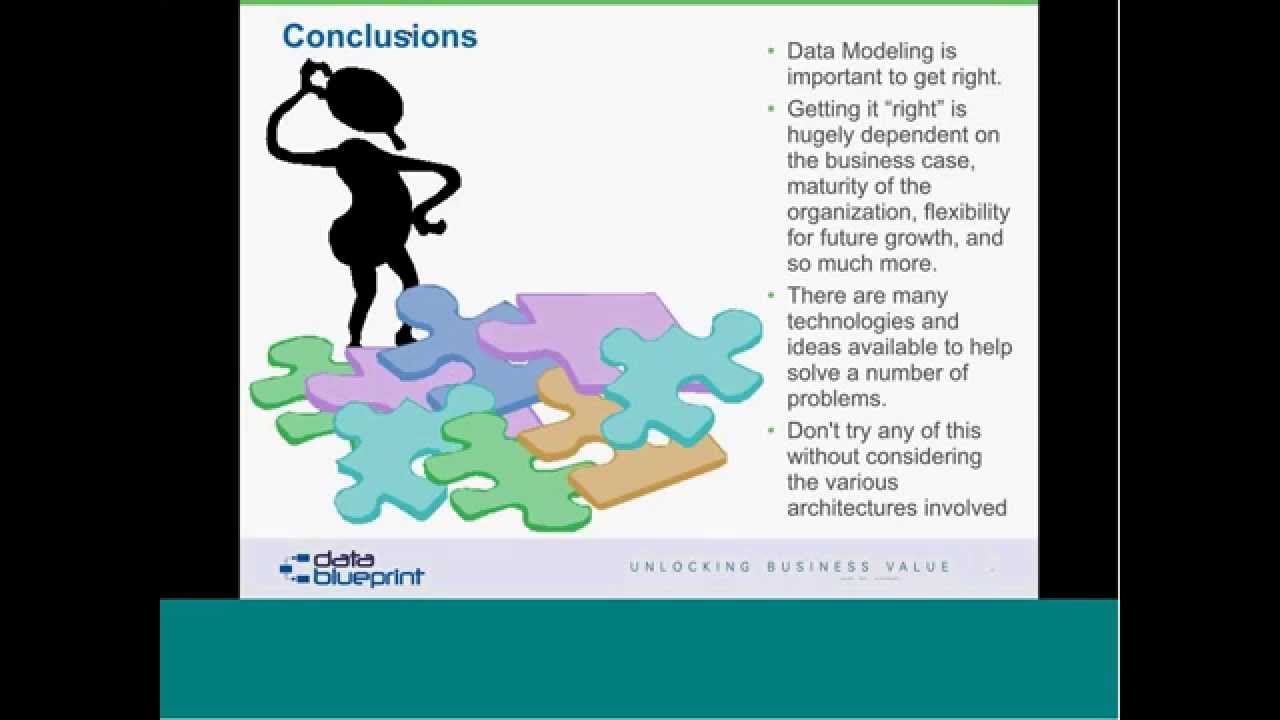
Businesses cannot compete without data. Every organization produces and consumes it. Data trends are hitting the mainstream and businesses are adopting buzzwords such as Big Data, data vault, data scientist, etc., to seek solutions for their fundamental data issues. Few realize that the importance of any solution, regardless of platform or technology, relies on the data model supporting it. Data modeling is not an optional task for an organization’s data remediation effort. Instead, it is a vital activity that supports the solution driving your business.
This webinar will address emerging trends around data model application methodology, as well as trends around the practice of data modeling itself. We will discuss abstract models and entity frameworks, as well as the general shift from data modeling being segmented to becoming more integrated with business practices.
Takeaways:
How are anchor modeling, data vault, etc. different and when should I apply them?
Integrating data models to business models and the value this creates
Application development (Data first, code first, object first)

The key to “monetizing” Data Management is thinking about data in a different way: as an information solution rather than simply an IT one. View more Data-Ed webinars with Peter Aiken: https://www.dataversity.net/ca....tegory/education/web

Failure to successfully monetize data management investments sets up an unfortunate loop of fixing symptoms without addressing the underlying problems. As organizations begin to understand poor data management practices as the root causes of many of their business problems, they become more willing to make the required investments in our profession. This presentation uses specific examples to illustrate the costs of poor data management and how it impacts business objectives. Join us and learn how you can better align your data management projects with business objectives to justify funding and gain management approval.

Autor bestseller Agilmente, En Cambio y En El Limbo.


#ariagassitambayong #liveariagassi #irlariagassi
Thanks for support my channel
@AriAgassiTambayong
https://www.facebook.com/agassiari/?r...
Instagram : https://www.instagram.com/ariagassi/
Tiktok : https://www.tiktok.com/@ariagassi?lan...
📧 For business inquiries please contact
agassinewnormal@gmail.com
#ldrcouple #pacarturkey #prankultah #prankdijodohinorangtua #prankonline
#prankultah #prankpacar #prankbebegim #pranksampenangis #internasionalrelationship #ldran #ldrinternasionalcouple #ariagassitambayong #prankpacarterdbest #bestprankcouple #fyp #trendingprank #pranksteronline #trollingcouple
__________________________________
LIKE, COMMENT, SUBSCRIBE & SHARE NYA BOORR

Data governance exercises authority and control over the management of your mission critical assets and guides how all other data management functions are performed. When selling data governance to organizational management, it is useful to concentrate on the specifics that motivate the initiative. This means developing a specific vocabulary and set of narratives to facilitate understanding of the business objectives and imperatives that demand governance. This webinar also provides you with an understanding of what data governance functions are required and how they fit with other data management disciplines. Understanding these governance aspects is necessary to eliminate the ambiguity that often surrounds effective data governance and stewardship programs. The goal of governance is to manage the data that supports organizational strategy.
Takeaways:
- Understanding why data governance can be tricky for most organizations
- Steps for improving data governance within your organization
- Guiding principles & lessons learned
- Understanding foundational data governance concepts based on the DAMA DMBOK

Groups:
CDMP Study Group on Facebook – https://www.facebook.com/groups/346145433213551
CDMP Study Group on LinkedIn — https://www.linkedin.com/groups/12965811/
Data Strategy Professionals on LinkedIn – https://www.linkedin.com/groups/13951141/
DAMA:
Find local DAMA chapter — https://www.dama.org/cpages/chapters
Purchase the CDMP — https://cdmp.info/exams/
Official CDMP FAQs — https://cdmp.info/faqs/
Additional Resources:
DMBOK — https://amzn.to/32oK8hH
Events – https://www.datastrategypros.com/events
NDMO Data Standards (KSA) article — https://www.datastrategypros.c....om/resources/ksa-dat
CDMP Fundamentals Bundle — https://www.datastrategypros.c....om/products/cdmp-fun
Career Coaching — https://www.datastrategypros.c....om/products/career-c

UC Irvine Extension Data Management Information Session

This webinar describes the Data Management Maturity (DMM) model and illustrates its use as a roadmap guiding organizational DM improvements. View more Data-Ed webinars with Peter Aiken: https://www.dataversity.net/ca....tegory/education/web

Get details on the foundations of data warehousing and how to utilize it in support of business strategy. View more Data-Ed webinars with Peter Aiken: https://www.dataversity.net/ca....tegory/education/web

Certain systems are more data focused than others. Usually their primary focus is on accomplishing integration of disparate data. In these cases, failure is most often attributable to the adoption of a single pillar (silver bullet). The three webinars in the Data Systems Integration and Business Value series are designed to illustrate that good systems development more often depends on at least three DM disciplines (pie wedges) in order to provide a solid foundation.
Much of the discussion of metadata focuses on understanding it and the associated technologies. While these are important, they represent a typical tool/technology focus and this has not achieved significant results to date. A more relevant question when considering pockets of metadata is: Whether to include them in the scope organizational metadata practices. By understanding what it means to include items in the scope of your metadata practices, you can begin to build systems that allow you to practice sophisticated ways to advance their data management and supported business initiatives. After a bit of practice in this manner you can position your organization to better exploit any and all metadata technologies.
Learning objectives include:
How do metadata practices contribute to business value
Lower operational costs
More flexible/adaptable architectures
What is metadata and why is it important (value proposition focus)
Metadata variety (types & subject areas)
Metadata Management Building blocks
Understanding foundational metadata concepts based on the Data Management Body of Knowledge (DMBOK)
How to utilize metadata practices in support of business strategy

We are in the middle of a data flood and we need to figure out how to tame it without drowning. Most of what has been written about Big Data is focused on selling hardware and services. But what about a Big Data Strategy that guides hardware and software decisions? While virtually every major organization is faced with the challenge of figuring out the approach for and the requirements of this new development, jumping into the fray hastily and unprepared will only reproduce the same dismal IT project results as previously experienced. Join Dr. Peter Aiken as he will debunk a number of misconceptions about Big Data as your un-typical IT project. He will provide guidance on how to establish realistic Big Data management plans and expectations, and help demonstrate the value of such actions to both internal and external decision makers without getting lost in the hype.
Takeaways:
The means by which Big Data techniques can complement existing data management practices
The prototyping nature of practicing Big Data techniques
The distinct ways in which utilizing Big Data can generate business value
Bigger Data isn’t always Better Data